Compare Pool Remodeling Services: Engineering & Contractor Evaluation Guide
Selecting a qualified aquatic contractor to overhaul a residential or commercial swimming pool requires evaluating complex structural engineering, municipal regulatory compliance, and mechanical system design. However, the residential pool construction and renovation sector remains highly fragmented, characterized by vast disparities in technical capability, licensing rigor, trade specialization, and financial solvency. When property owners attempt to compare pool remodeling services, they are rarely evaluating identical scope offerings. Instead, they face a confusing spectrum of contractor operational models, varying material specifications, and widely divergent structural methodologies.
Evaluating prospective renovation partners is further complicated by the hidden nature of aquatic infrastructure. Specifically, sub-surface hydraulic plumbing grids, internal pneumatic concrete shell integrity, and underground electrical grounding arrays cannot be assessed through superficial surface inspections or promotional portfolios. Consequently, contractor selection processes driven primarily by initial line-item bid costs frequently result in severe scope omissions, hidden change orders, structural delamination, or premature equipment failure.
To build a resilient, long-term asset, property owners and facility managers must establish a rigorous, objective evaluation framework. Therefore, assessing pool renovation providers requires scrutinizing specialized technical credentials, structural waterproofing protocols, sub-contractor management practices, and post-construction operational warranties. As a result, this reference guide provides a definitive analytical model to systematically compare pool remodeling services, ensuring capital investments yield structural integrity, energy efficiency, and operational durability.
Understanding “compare pool remodeling services”
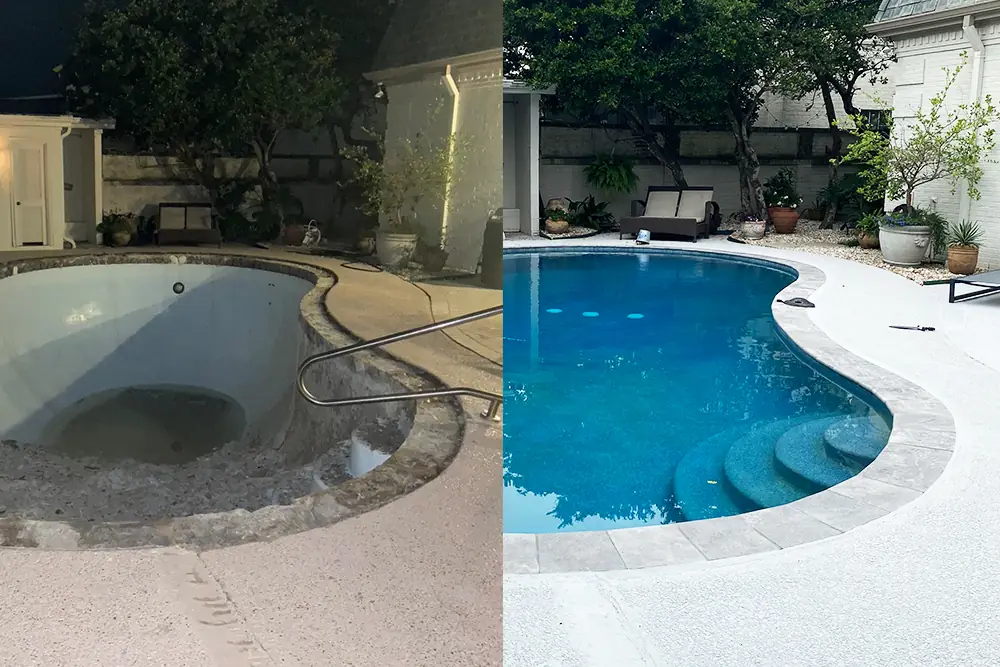
To effectively compare pool remodeling services, one must move beyond comparing simple financial quotes and evaluate the structural, mechanical, and operational methodologies proposed by competing contractors. The phrase implies an apples-to-apples comparison, but line-item estimates from different contractors rarely reflect equivalent engineering standards or material quality. For instance, a lower bid may reflect omitted surface preparation steps, undersized filtration equipment, or reliance on uninsured sub-contractors. Conversely, a higher bid may include complete hydro-demolition prep, wide-bore PVC plumbing overhauls, and comprehensive project management oversight.
Evaluating renovation services requires analyzing the underlying business structure and technical specialization of each firm. Generally, contractors operating in the pool remodeling sector fall into distinct operational profiles: volume-driven plaster applicators, specialized hydraulic and equipment mechanics, general outdoor living contractors, and high-end structural aquatic engineering firms. Therefore, attempting to compare pool remodeling services without categorizing firms into their respective operational models leads to severe misalignment between owner expectations and contractor capabilities.
Four Dimensions of Contractor Evaluation
A comprehensive comparison requires evaluating four core dimensions of contractor performance:
-
Structural and Material Proficiency: First, the contractor must demonstrate the ability to diagnose concrete substrate degradation, repair rebar rust spalling, execute structural beam tie-ins, and apply polymer-modified aggregate finishes according to manufacturer bond specifications.
-
Hydraulic and Engineering Expertise: Second, they need the capacity to calculate Total Dynamic Head (TDH), size pipe networks to minimize friction loss, and design circulation systems compliant with current flow dynamics and safety regulations.
-
Administrative and Regulatory Compliance: Third, firms must maintain proper state licensing, comprehensive commercial general liability insurance, active workers’ compensation coverage, and verified municipal permitting track records.
-
Post-Installation Governance and Warranty Defense: Finally, contractors require the financial stability needed to back multi-year structural and material warranties, alongside offering structured 28-day water chemistry curing protocols following plaster application.
Focusing exclusively on aesthetic options—such as tile patterns or surface plaster colors—distorts the evaluation process. As a result, a robust assessment prioritizes the structural and mechanical health of the pool vessel before evaluating decorative additions.
Deep Contextual Background: Evolution of the Aquatic Renovation Industry
Understanding how the aquatic renovation market evolved provides essential context for evaluating modern contractors and service models.
The Fragmented Era (1970s–1980s)
Historically, residential pool construction and remodeling were highly localized, fragmented cottage industries. Contractors relied on regional cement suppliers and basic masonry techniques, with little standardization in hydraulic design or water chemistry management. In addition, renovations were largely cosmetic, consisting of applying a thin coat of white marcite plaster over existing surfaces and replacing broken ceramic waterline tiles. Plumbing grids were installed using narrow 1.5-inch schedule 40 PVC pipes, powered by inefficient single-speed induction pumps.
During this era, contractor vetting was entirely informal, relying on local word-of-mouth recommendations. Consequently, licensing requirements were minimal in many jurisdictions, and formal structural warranties were rare.
The Sub-Contractor Boom and Specialization (1990s–2000s)
As suburban pool installations expanded rapidly, the swimming pool construction industry shifted toward a heavily sub-contracted labor model. General pool contractors increasingly acted as sales brokers, outsourcing excavation, steel rebar tying, plumbing, shotcreting, and plastering to independent piece-rate crews.
While this model increased construction speed and lowered overhead costs, it introduced significant quality control challenges. Specifically, responsibilities became blurred when structural failures occurred, as general contractors blamed material suppliers, who in turn blamed specialized application crews. Thus, during this period, property owners who sought to compare pool remodeling services began encountering vast discrepancies between sales representation and field execution quality.
The Modern Regulatory and Technological Era (2010s–Present)
Today, pool remodeling has transformed into an engineering-intensive discipline governed by strict building codes, energy efficiency standards, and safety laws. Moreover, the introduction of variable-speed pump mandates, the Virginia Graeme Baker (VGB) Act for drain safety, and advanced water chemistry systems (such as salt-water chlorination, ozone, and Advanced Oxidation Processes) require contractors to possess deep technical expertise.
Modern contractors must navigate complex municipal permitting requirements, structural engineering sign-offs, and sophisticated hydraulic calculations. Consequently, evaluating renovation providers today demands a detailed assessment of a firm’s technical literacy, regulatory compliance, and field management practices.
Conceptual Frameworks and Mental Models for Contractor Evaluation
Applying structured evaluation frameworks prevents emotional decision-making and ensures an objective assessment of competing renovation proposals.
1. The Scope Equivalency Triad
The Scope Equivalency Triad dictates that any valid comparison between two or more renovation proposals must verify balance across three critical vectors:
-
Substrate Preparation Depth: Verifying whether the scope includes full pneumatic chip-out down to bare concrete versus simple acid-washing or bond-coating over degraded material.
-
Component Specification Parity: Ensuring equipment quotes specify exact model numbers, filter surface areas, and pump flow rates rather than generic brand names.
-
Labor Governance and Insurance: Confirming whether labor will be executed by direct W-2 employee crews or unvetted, third-party 1099 sub-contractors.
If a proposal lacks detail in any of these three vectors, it cannot be directly compared against a comprehensive, engineering-grade bid.
2. The Total Cost of Ownership (TCO) Hydraulic Model
When evaluating contractors offering equipment overhauls, assessing initial purchase price alone is misleading. Indeed, the Total Cost of Ownership model evaluates long-term operational costs:
For example, a contractor proposing a low-cost, single-speed pump and undersized cartridge filter presents a low initial capital outlay. However, a contractor proposing wide-bore 2.5-inch PVC plumbing paired with a variable-speed pump running at low RPM reduces friction head loss and cuts electrical consumption by up to 80–90%, delivering a significantly lower TCO over a five-to-ten-year horizon.
3. The Warranty Risk Transfer Model
Warranties are only as resilient as the corporate entity backing them and the clear definition of installation terms. In particular, this model evaluates warranty viability across three criteria:
-
Manufacturer Certification Status: Is the contractor a certified installer for the specified plaster or equipment manufacturer? Non-certified installations often void extended factory warranties.
-
Workmanship vs. Material Segregation: Does the contractor explicitly cover labor costs to fix defective material, or do they only pass through raw material replacement from the manufacturer?
-
Corporate Longevity Ratio: Has the contracting business operated under the same business license and corporate structure for longer than the duration of the warranty being offered?
Key Categories of Pool Remodeling Service Providers and Trade-Offs
When property owners compare pool remodeling services, they must recognize that service providers operate under fundamentally different business models. Therefore, each model offers distinct structural trade-offs regarding cost, project duration, specialized expertise, and administrative oversight.
1. High-Volume Plaster and Surface Specialists
Firms focused almost exclusively on interior surface applications (plaster, quartz, exposed pebble) and perimeter tile line replacement.
-
Strengths: Highly efficient surface application, competitive material pricing due to high volume, and fast execution times.
-
Trade-offs: Minimal in-house structural engineering or hydraulic expertise; furthermore, they frequently overlook underlying concrete beam fractures or failing plumbing lines.
2. Full-Service Aquatic Design-Build Firms
Turnkey contractors who manage structural modifications, deep hydraulic re-piping, decking, outdoor structures, and complete automation overhauls.
-
Strengths: Single point of accountability, robust in-house engineering and permitting capabilities, and thorough project management.
-
Trade-offs: High capital cost, longer project schedules, and substantial overhead markup.
3. Equipment and Hydraulic Repair Technicians
Specialized trade contractors centered primarily on the mechanical pad (pumps, automation, heaters, filtration, chemical dosing).
-
Strengths: Deep mastery of electrical codes, fluid dynamics, and equipment programming; as a result, they are ideal for targeted mechanical upgrades.
-
Trade-offs: Limited capacity to execute structural concrete work, decking, or high-end masonry refinishing.
4. General Outdoor Living and Masonry Contractors
General residential contractors who incorporate pool remodeling as part of broader backyard landscape construction.
-
Strengths: Excellent spatial integration between pool decks, patios, kitchens, and retaining walls.
-
Trade-offs: However, they often lack specialized knowledge regarding pool chemistry, waterproofing membranes, hydrostatic relief mechanisms, and underwater structural concrete behavior.
Contractor Operational Comparison Matrix
| Feature / Capability | High-Volume Surface Specialists | Full-Service Design-Build Firms | Hydraulic & Mechanical Specialists | General Outdoor Living Contractors |
| Typical Capital Investment | Baseline to Moderate | Premium | Low to Moderate | Moderate to High |
| Structural Shell Modification | Limited | Comprehensive | None | Moderate (External Deck/Walls) |
| Hydraulic Redesign Capacity | Low | Very High | Very High | Low to Medium |
| Project Management Level | Basic / On-Site Foreman | Dedicated Project Manager | Technician-Direct | General Site Superintendent |
| Permitting & Code Handling | Basic | Comprehensive | Component-Specific | General Building Permits |
| Warranty Administration | Material Pass-Through | In-House + Manufacturer | Direct Factory Authorized | Variable / Contractor-Backed |
Detailed Real-World Evaluation Scenarios, Constraints, and Risks
Examining practical evaluation scenarios illustrates how different contractor qualifications directly impact project outcomes.
Scenario 1: Evaluating Bids for a Structurally Compromised Gunite Shell
Context and Constraints
A 35-year-old concrete pool exhibits severe horizontal shear cracking along the tile line, accompanied by active water loss through the main drain sumps. Therefore, three contractors are asked to submit remodeling proposals.
Evaluation Comparison
-
Contractor A (Volume Surface Specialist): Proposes acid washing the shell, filling the tile crack with standard hydraulic cement, and applying a new quartz aggregate finish. Cost: $14,000.
-
Contractor B (General Masonry Contractor): Proposes replacing the waterline tile, installing new travertine coping, and plastering over the existing surface without structural core testing. Cost: $19,000.
-
Contractor C (Design-Build Firm): Conducts pressure testing to confirm main drain pipe leaks, proposes chipping out concrete around fractured rebar, treating exposed steel with anti-corrosion coatings, re-pouring the beam with non-shrink structural grout, installing an elastomeric waterproofing membrane behind the tile line, and applying a complete pebble aggregate finish after a full shell chip-out. Cost: $34,000.
Analysis & Risk Identification
Contractors A and B present significantly lower bids because they ignore the underlying structural failure. Consequently, selecting Contractor A or B will result in the horizontal beam crack telegraphing through the new tile and plaster within 12 to 18 months, causing structural failure and lost capital. On the other hand, Contractor C’s quote, while higher, addresses the root cause of the structural failure.
Scenario 2: Mechanical Overhaul and Equipment Pad Automation
Context and Constraints
A property owner seeks to modernize an energy-inefficient equipment pad featuring a single-speed 2.5 HP pump, a degraded sand filter, and legacy 1.5-inch PVC plumbing lines.
Evaluation Comparison
-
Contractor A: Quotes replacing the single-speed pump with a new variable-speed pump attached directly to the existing 1.5-inch PVC plumbing manifold. Cost: $3,200.
-
Contractor B: Proposes re-piping the visible equipment pad with 2.5-inch PVC, installing a high-capacity cartridge filter, integrating an automated chemical dosing system, and performing Total Dynamic Head (TDH) calculations to optimize pump speed schedules. Cost: $8,500.
Analysis & Risk Identification
Contractor A’s proposal creates a severe hydraulic bottleneck. Specifically, attaching a high-flow variable-speed pump to legacy 1.5-inch pipes causes extreme suction resistance, leading to pump cavitation, high operational noise, reduced energy savings, and premature motor failure. In contrast, Contractor B’s approach modifies the plumbing network to match the operational dynamics of the new equipment, ensuring long-term efficiency.
Planning, Financial Structuring, and Cost Dynamics
Accurately evaluating costs requires analyzing direct labor, material specifications, permitting fees, and risk contingency reserves.
Financial Scope Breakdown
Proper capital allocation relies on categorizing project expenses into four primary buckets:
-
Direct Surface and Material Costs: Plaster aggregates, waterline tiles, coping stones, structural waterproofing compounds, and deck pavers.
-
Mechanical and Hydraulic Assets: Variable-speed pumps, large-capacity cartridge or DE filters, heaters, salt-water cells, automation control panels, and PVC plumbing networks.
-
Labor, Site Management, and Sub-Contractor Costs: Demolition, excavation, steel tying, shotcrete placement, plaster troweling, and electrical wiring.
-
Administrative and Contingency Reserves: Municipal building permits, structural engineering calculations, utility locating, and underground structural leak contingencies (recommended at 15–20% of total contract value).
Industry Cost Ranges by Service Category
| Remodeling Service Scope | Basic Contractor Scope | Comprehensive / Engineering-Grade Scope | Contingency Allocation Needed |
| Standard Interior Resurfacing | $7,000 – $12,000 (Basic Plaster) | $15,000 – $28,000 (Pebble + Chip-out Prep) | 10% |
| Waterline Tile & Coping Replacement | $4,000 – $8,000 (Standard Ceramic) | $9,000 – $18,000 (Natural Stone / Glass Tile) | 15% |
| Equipment Pad Modernization | $3,000 – $6,000 (Basic Swap) | $8,000 – $16,000 (Full Pad Re-pipe + Automation) | 10% |
| Full Structural Transformation | $35,000 – $65,000 (Cosmetic focus) | $70,000 – $150,000+ (Complete Engineering Overhaul) | 20% |
Diagnostic Tools, Audit Strategies, and Support Protocols
Before signing a renovation contract, property owners should request that contractors perform diagnostic evaluations to establish precise scope baselines.
Essential Diagnostic Protocols
-
Acoustic and Ultrasonic Leak Testing: First, this protocol utilizes specialized audio equipment to pinpoint fractures in buried suction and return lines before finalizing plumbing renovation budgets.
-
Video Pipe Inspection (CCTV): Second, technicians push fiber-optic cameras through underground PVC lines to assess interior pipe scaling, structural crushed zones, or root intrusion.
-
Concrete Core Drilling and Petrographic Analysis: Third, core samples test the concrete shell to determine compressive strength, depth of carbonation, and concrete soundness before applying heavy stone decking or structural additions.
-
Sub-Surface Ground Penetrating Radar (GPR): Finally, GPR maps underground voids around the exterior of the pool shell created by historic leaks, preventing deck settlement after new paving is installed.
Risk Landscape, Contractor Failure Modes, and Liability Management
Renovating an aquatic facility involves significant financial, structural, and legal risks. Therefore, understanding common contractor failure modes allows owners to implement effective risk mitigation strategies.
Primary Contractor Failure Modes
-
Sub-Contractor Payment Lien Risk: If a general contractor fails to pay their material suppliers or specialized sub-contractors, suppliers can place mechanic’s liens directly against the homeowner’s real estate property, regardless of whether the homeowner paid the general contractor in full.
-
Uninsured Labor Injuries: Pool demolition and concrete application involve heavy equipment and hazardous working conditions. Consequently, contracting with firms that lack active, verifiable Workers’ Compensation coverage exposes property owners to direct financial liability for on-site worker injuries.
-
Improper Shell Dewatering (Hydrostatic Float): Draining a concrete pool in high-water-table areas without opening hydrostatic relief valves or running continuous dewatering well points can cause the entire pool shell to lift out of the ground, permanently destroying the pool and surrounding structure.
-
Inadequate Surface Preparation Delamination: Furthermore, applying new plaster coats over old plaster without complete mechanical chipping or bond-coat preparation leads to widespread surface delamination within 2 to 4 years.
Governance, Contractual Protections, and Quality Assurance
Protecting a capital investment in pool remodeling requires establishing structured contractual governance terms before work begins.
Key Contractual Safeguards
-
Lien Waiver Protocols: Require the contractor to provide signed Conditional Lien Releases alongside each progress payment request, followed by Unconditional Lien Releases once funds clear.
-
Milestone-Based Payment Schedules: Never allow payment schedules to front-load capital. Instead, align payments strictly with verified site milestones (e.g., 10% at signing, 25% post-demolition, 25% post-tile/coping, 25% post-plaster, 15% post-curing and operational sign-off).
-
Detailed Material and Equipment Specifications: Ensure the contract explicitly lists exact brand names, model numbers, pipe dimensions, and plaster aggregate grades rather than placeholder language.
-
28-Day Curing Responsibility Clause: Finally, specify in writing who manages initial daily plaster brushing, water chemistry balancing, and filter purging during the critical 28-day hydration window following plaster installation.
Measurement Metrics and Performance Evaluation Signals
Property owners should track clear leading and lagging metrics during and after the renovation to verify service quality.
Diagnostic Metrics Checklist
-
Leading Indicators (During Construction):
-
Verification of municipal permit posting on site before demolition begins.
-
Verification that plumbing pressure tests hold static pressure (minimum 35 PSI) for at least 24 hours prior to backfilling trenches.
-
Thickness verification of plaster/aggregate application (ensuring uniform 3/8-inch to 1/2-inch coverage).
-
-
Lagging Indicators (Post-Construction):
-
Stable daily water level retention (verifying total shell and plumbing watertight integrity).
-
Electrical consumption verification (confirming variable-speed pump operation aligns with estimated energy savings).
-
Langelier Saturation Index (LSI) stability within the ideal -0.3 to +0.3 range without excessive chemical adjustments.
-
Common Misconceptions and Industry Oversimplifications
1. “All contractors use the same plaster application crews.”
Correction: While some regional sub-contractors work for multiple sales firms, top-tier contractors maintain exclusive relationships with certified application teams or employ trained W-2 plaster crews who adhere to strict manufacturer mixing and troweling protocols.
2. “A 10-year plaster warranty covers all future surface issues.”
Correction: Material warranties offered by manufacturers strictly cover factory defects in the raw cement or aggregate mix. However, they explicitly exclude failures caused by poor application practices, inadequate substrate bonding, or improper owner water chemistry management.
3. “Replacing an equipment pad always takes a pool out of code compliance.”
Correction: Replacing equipment typically requires bringing the specific upgraded components up to current building and safety codes (such as VGB-compliant drain covers and electrical GFCI protection), rather than requiring a complete rebuild of the entire legacy structure unless major structural work is initiated.
4. “The lowest quote represents the best value if materials match.”
Correction: Material specifications represent only a fraction of total job quality. In reality, application technique, surface preparation depth, trade coordination, insurance coverage, and warranty support account for the majority of long-term installation value.
Ethical, Environmental, and Regulatory Compliance Considerations
Systematically evaluating pool renovation providers requires verifying compliance with regional environmental laws and municipal building codes.
Environmental and Regulatory Requirements
-
Energy Efficiency Laws: First, many states mandate variable-speed pumps for all residential filtration upgrades exceeding 1.0 total horsepower. Therefore, contractors proposing legacy single-speed pumps operate outside energy compliance standards.
-
Clean Water Discharge Compliance: Second, draining pool water during renovations or filter backwashing must comply with municipal storm sewer regulations. Contractors must utilize proper neutralization procedures before discharging chemically treated water.
-
Suction Entrapment Safety (VGB Act): Finally, any contractor performing hydraulic or surface work must ensure suction outlet systems feature compliant anti-entrapment covers and dual-main drain configurations to protect swimmers from hydraulic entrapment hazards.
Conclusion
Determining the appropriate renovation partner requires analyzing structural engineering capabilities, technical qualifications, and administrative rigor rather than evaluating surface-level price estimates. Ultimately, a successful renovation depends on selecting a contractor who diagnoses underlying structural conditions, designs efficient hydraulic systems, and adheres to strict material application protocols.
By systematically evaluating service providers through structured scope verification, detailed contract governance, and rigorous diagnostic testing, property owners can protect their capital investment. As a result, aligning contractor selection with long-term engineering standards ensures that renovated aquatic assets deliver operational efficiency, structural durability, and lasting value for decades to come.