Top Pool Resurfacing Plans: Material & Engineering Guide
Evaluating surface restoration strategies for aquatic vessels requires managing civil engineering principles, material chemistry, fluid dynamics, and long-term asset management. Swimming pool interiors operate under relentless environmental stress, exposed to continuous hydraulic pressure, fluctuating solar radiation, and active chemical oxidation. When property owners and facility directors evaluate options to rehabilitate a degraded shell finish, failure frequently stems not from the quality of the finish material itself, but from poorly structured preparation protocols and unaddressed subsurface structural anomalies.
Developing comprehensive restoration strategies demands an understanding of how cementitious matrices, synthetic polymer barriers, and natural aggregates interact with underlying pneumatic concrete shells. Over time, dynamic ground movement and persistent aggressive water chemistry systematically weaken interior finishes. Consequently, a surface overhaul cannot be viewed as a mere cosmetic refinishing task. It represents a precise engineering intervention that must balance cement hydration chemistry, water saturation balance, mechanical bond mechanics, and environmental exposure profiles.
Furthermore, evolving industry practices and environmental regulations have transformed how surface restoration is executed. Modern protocols prioritize complete substrate mechanical bonding, strict 28-day chemical curing management, and high-density polymer modifications to resist chemical erosion. As a result, drafting effective surface rehabilitation plans sits at the intersection of structural engineering, industrial chemistry, landscape architecture, and facility lifecycle planning.
Understanding “top pool resurfacing plans”
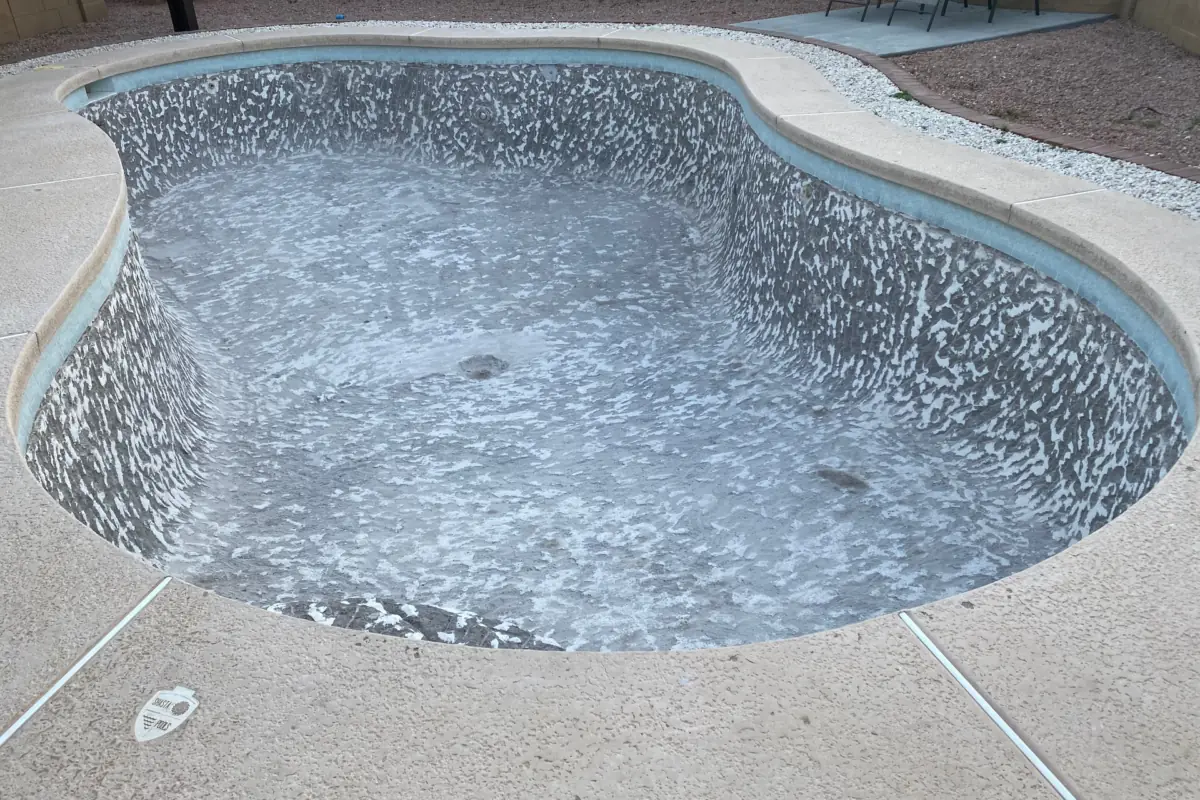
Establishing top pool resurfacing plans requires moving far beyond simple material selection guides or cosmetic architectural brochures. In professional aquatic design and facility engineering, the concept encompasses a comprehensive execution protocol detailing substrate mechanical prep, pneumatic chipping depth, bonding agent specifications, hydration curing schedules, and ongoing hydro-chemical balance targets. Evaluating restoration options without analyzing underlying concrete shell integrity leads directly to premature bond failure, delamination, and lost capital.
A major point of failure in residential and commercial property management occurs when decision-makers separate surface finish selection from substrate preparation standards. For example, specifying a premium exposed river pebble finish without requiring a complete pneumatic chip-out of degraded legacy plaster introduces severe mechanical risk. If the underlying cementitious layer possesses internal hollow spots (delamination) or active micro-cracks, the weight of the new aggregate finish will eventually pull the legacy substrate away from the structural gunite shell.
Core Pillars of Comprehensive Resurfacing Plans
To guarantee structural longevity and watertight performance, authoritative top pool resurfacing plans must systematically define four critical operational vectors:
-
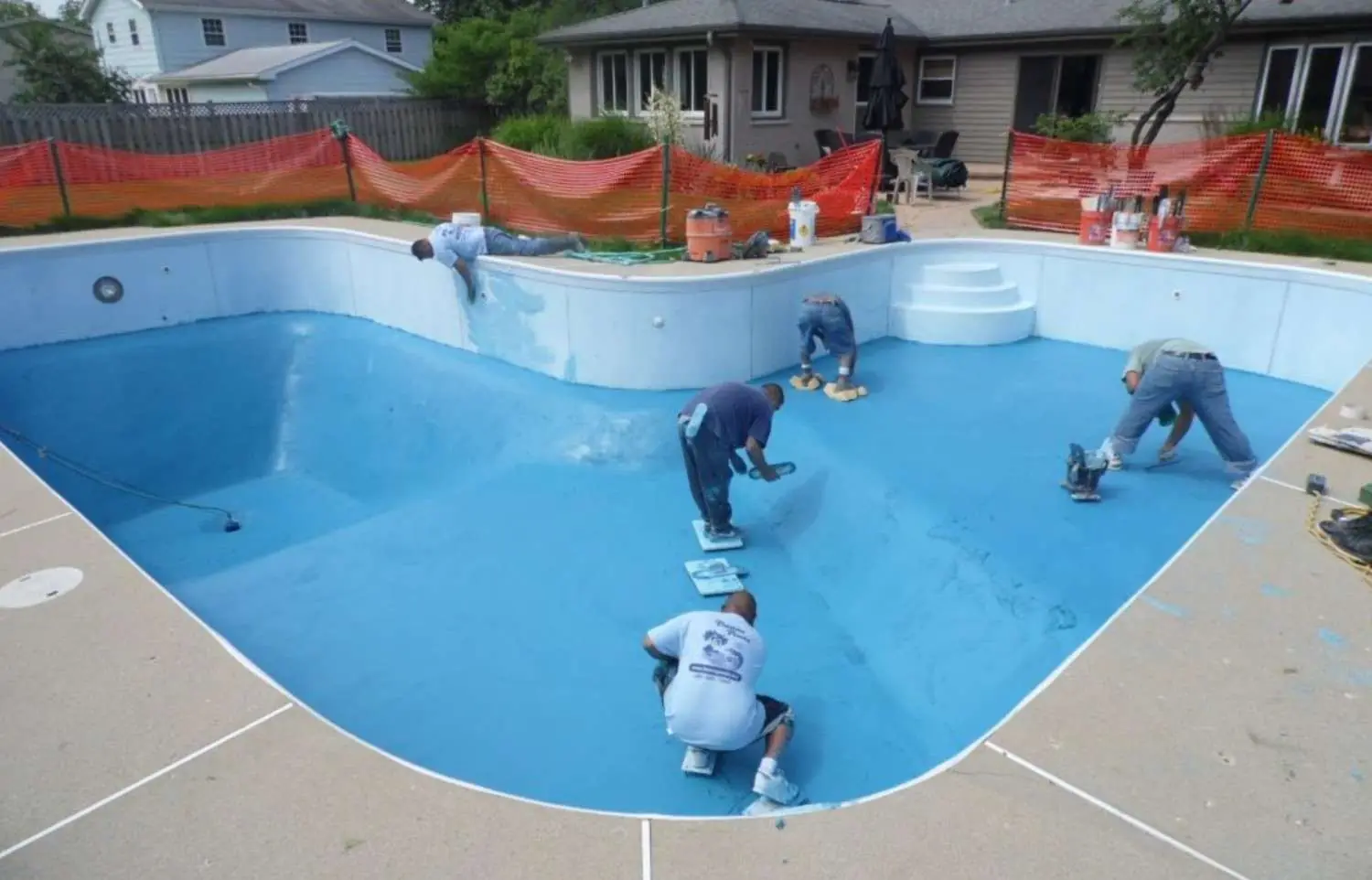
Substrate Preparation Protocols: Engineered specifications detailing pneumatic chip-out depth, ultra-high-pressure hydro-demolition parameters, rebar rust isolation, and polymer-modified scratch coat application.
-
Material Matrix Specifications: Technical material formulations defining cement-to-aggregate ratios, quartz or pebble density distributions, pozzolanic additives, and elastomeric waterproofing additives.
-
Hydration and Curing Governance: Strict 28-day operational guidelines managing initial fill dynamics, daily dual-brushing protocols, acid dosing for pH neutralization, and delay of automatic chlorination or salt cell activation.
-
Chemical Balance Integration: Long-term water management protocols calibrated around the Langelier Saturation Index (LSI) to prevent calcium leaching or surface scale deposition.
Prioritizing visual texture or color tint over surface mechanical prep and curing governance guarantees early material degradation. Therefore, a sound strategic plan establishes structural stability and bond reliability long before final decorative materials are chosen.
Deep Contextual Background: Evolution of Surface Restoration Engineering
Understanding the historical progression of aquatic surface technology highlights why modern engineering documentation demands such technical rigor.
The Standard Marcite Era (1960s–1980s)
During the mid-to-late 20th century, white marcite plaster—a basic blend of white Portland cement and marble dust—was the standard finish for in-ground concrete pools. While smooth and bright, marcite exhibits low structural density and high porosity. Furthermore, early restoration efforts relied on rudimentary surface prep, often consisting of simple acid washes or light bond coat applications directly over aging plaster.
As water chemistry practices remained mostly manual and imprecise, marcite surfaces suffered from rapid calcium etching, pitting, and short service lifespans (typically 5 to 7 years). Additionally, when these legacy surfaces were repeatedly coated with new plaster layers, the accumulative material weight exacerbated subsurface delamination.
The Introduction of Modified Quartz and Aggregates (1990s–2000s)
To counter the vulnerability of marble-based cements, material manufacturers introduced quartz aggregate blends and polymer-modified cements. Harder quartz crystals replaced soft crushed marble, significantly improving resistance to chemical etching and mechanical wear. Shortly thereafter, exposed river pebble finishes emerged, offering maximum structural density and extended service life.
However, during this era, surface preparation practices remained inconsistent. Many contractors continued applying bond coats over un-chipped plaster, resulting in widespread bond failures as heavier pebble finishes exerted shear stress on weak legacy substrates.
The Modern Engineered Substrate Era (2010s–Present)
Today, executing top pool resurfacing plans operates as a precise material science discipline. Contemporary restoration protocols emphasize complete substrate mechanical chipping down to sound gunite, utilization of synthetic resin bonding agents, and incorporation of pozzolanic additives (such as metakaolin or silica fume) to consume free lime during hydration.
Furthermore, modern water management relies on automated monitoring and strict LSI equilibrium modeling to protect newly finished surfaces. Consequently, current resurfacing plans function as integrated structural, chemical, and asset management frameworks designed to deliver 15 to 25+ years of operational performance.
Conceptual Frameworks and Mental Models for Surface Rehabilitation
Applying established engineering mental models prevents costly material selection errors and ensures balanced capital allocation.
1. The Langelier Saturation Index (LSI) Equilibrium Model
The Langelier Saturation Index calculates the chemical balance of pool water to determine if it is corrosive (etching), balanced, or scale-forming:
Where $\text{TF}$ is Temperature Factor, $\text{CF}$ is Calcium Hardness Factor, and $\text{AF}$ is Total Alkalinity Factor. Water seeks saturation equilibrium. If water is undersaturated with calcium ($\text{LSI} < -0.3$), it aggressively leaches calcium hydroxide directly from cementitious interior finishes, causing surface pitting and structural weakening. Conversely, oversaturated water ($\text{LSI} > +0.3$) deposits calcium carbonate scale across finishes and heat exchangers.
2. Mechanical Bond Shear Strength Model
The mechanical bond strength between a legacy concrete shell and a newly applied aggregate finish determines surface durability:
Applying a new plaster layer over smooth, un-chipped legacy plaster yields low shear strength. Conversely, executing a full pneumatic chip-out to expose aggregate in the underlying gunite shell, followed by a polymer-modified scratch coat, increases surface roughness and mechanical keying, maximizing bond shear strength.
3. Concrete Moisture Vapor Transmission (MVT) Principle
Concrete is a porous medium through which moisture vapor migrates due to vapor pressure differentials between external soil and the pool interior:
If non-breathable surface barriers (such as low-solid epoxy paints) are applied over concrete shells subject to external groundwater migration, moisture vapor pressure accumulates behind the film, causing blubbering, blistering, and complete coating detachment.
Key Categories of Resurfacing Systems and Material Trade-Offs
When establishing surface restoration strategies, interventions fall into five major material and structural categories. Each system presents specific trade-offs regarding initial capital outlay, service life, texture, and chemical resistance.
1. Standard White Marcite Plaster
A traditional formulation of white Portland cement and finely crushed marble aggregate.
-
Benefits: Lowest initial material cost, smooth surface underfoot, bright water reflection.
-
Trade-offs: Low chemical etching resistance, high porosity, requires strict LSI management, shortest lifespan (5–8 years).
2. Exposed Quartz Aggregate Finishes
Blends crushed quartz crystals with polymer-modified Portland cement and color-pigmented aggregates.
-
Benefits: Harder than standard marble, enhanced chemical resistance, vibrant color options, moderate lifespan (10–15 years).
-
Trade-offs: Moderately higher material cost than marcite, slightly rougher surface texture.
3. Exposed Pebble Aggregate Finishes
Utilizes smooth, rounded river pebbles or natural stone beads bound in polymer-reinforced cement.
-
Benefits: Maximum structural density, exceptional chemical etching resistance, natural aesthetic, longest lifespan (15–25+ years).
-
Trade-offs: Highest initial capital investment, bumpy texture underfoot, requires experienced applicators to prevent pebble loss.
4. High-Solid Epoxy and Synthetic Polymer Coatings
Chemical coatings rolled or sprayed onto prepared concrete surfaces to form an impermeable membrane.
-
Benefits: Low initial labor cost, smooth glossy finish, fast application turnaround.
-
Trade-offs: Highly sensitive to surface moisture during prep, prone to blistering from exterior groundwater MVT, short lifespan (3–6 years).
5. Thermal Polymer Hybrid Spray Finishes
High-density thermoplastic powders melted and pneumatic-sprayed directly onto concrete substrates.
-
Benefits: Non-porous surface, stain-resistant, highly flexible to resist micro-cracking, zero chemical cure time required.
-
Trade-offs: Requires specialized heating application equipment, high capital cost, limited historic track record on legacy residential shells.
Comparison of Core Resurfacing Finishes
| Finish Category | Expected Service Life | Capital Outlay Profile | Surface Texture | Chemical Etch Resistance | LSI Sensitivity Band |
| White Marcite Plaster | 5 – 8 Years | Baseline (1.0x) | Extremely Smooth | Low | Strict (-0.2 to +0.2) |
| Exposed Quartz Blend | 10 – 15 Years | Moderate (1.4x–1.7x) | Lightly Textured | Medium-High | Moderate (-0.3 to +0.3) |
| Exposed Pebble Aggregate | 15 – 25+ Years | High (2.0x–2.8x) | Medium to Bumpy | Very High | Wide (-0.5 to +0.5) |
| High-Solid Epoxy Paint | 3 – 6 Years | Economy (0.4x–0.6x) | Smooth / Glossy | Low-Medium | Narrow (-0.1 to +0.2) |
| Thermoplastic Hybrid | 12 – 18 Years | High (2.2x–2.6x) | Smooth / Satin | High | Very Wide (-0.6 to +0.6) |
Detailed Real-World Scenarios, Structural Constraints, and Risks
Evaluating practical engineering scenarios demonstrates how site-specific constraints dictate resurfacing strategy.
Scenario 1: Legacy Gunite Pool with Multiple Existing Plaster Layers
Site Constraints
A 45-year-old concrete pool has undergone two previous plaster applications without prior chip-outs. The total plaster thickness exceeds 1.5 inches along the walls, and hollow drum-like sounds (delamination) are detected across 35% of the floor area when tapped with a sounding rod.
Engineering Intervention
Applying a new quartz or pebble finish over the existing plaster will cause structural failure due to excessive weight on compromised bond lines. The execution plan mandates a complete pneumatic chip-out down to the bare, structural gunite shell. Rusted rebar exposed during chipping must be cut back, treated with anti-corrosion zinc coatings, and patched with high-strength structural repair mortar before applying a polymer-modified scratch coat.
Failure Mode & Second-Order Effects
If the contractor executes a simple “bond coat over old plaster” to save labor costs, the new aggregate layer will detach in large sheets within 12 to 24 months as the underlying hollow layers fail under hydraulic pressure and thermal expansion.
Scenario 2: High Water Table Installation with Soft Source Water
Site Constraints
A coastal residential facility set over a high groundwater table requires refinishing. The municipal source water exhibits extremely low calcium hardness (under 80 ppm) and low total alkalinity (under 50 ppm).
Engineering Intervention
Draining the pool without managing groundwater risks hydrostatic vessel flotation. The plan requires installing a continuous perimeter dewatering well-point system prior to emptying the pool, while keeping the main drain hydrostatic relief valve open.
Regarding material selection, soft fill water will aggressively attack standard white marcite plaster. Therefore, the specification mandates a high-density exposed pebble aggregate modified with pozzolanic silica fume additives, combined with pre-treating fill water with calcium chloride before it contacts the fresh finish.
Planning, Cost, and Resource Dynamics
Structuring top pool resurfacing plans requires separating direct material expenses from indirect surface preparation labor, site logistics, and ongoing chemical maintenance budgets.
Capital Allocation Dynamics
-
Substrate Demolition & Mechanical Prep (30–35%): Pneumatic chip-outs, hydro-blasting, rebar rust treatment, beam crack repairs, and disposal fees.
-
Material Supply & Finish Application (40–45%): Polymer-modified aggregate mixes, specialized troweling labor, tile line replacement, and elastomeric bonding coats.
-
Site Logistics & Water Management (10–15%): Dewatering pumps, auxiliary fill tanks, trucked pre-balanced fill water, and waste wash disposal.
-
Curing Governance & Initial Startup (10%): Daily brushing labor, chemical curing agents, muriatic acid dosing, and post-fill chemical testing arrays.
Capital Budgeting Ranges by Surface Scope
| Resurfacing Tier | Typical Scope Included | Investment Range | Recommended Contingency |
| Basic Surface Refresh | Light prep, bonding coat, standard white marcite plaster, basic tile cleanup. | $7,000 – $12,000 | 10% |
| Mid-Tier Quartz Upgrade | Full perimeter undercut, quartz aggregate application, new waterline tile. | $12,000 – $20,000 | 12% |
| Engineered Pebble Restoration | Full pneumatic chip-out to gunite, exposed river pebble finish, stone coping. | $22,000 – $38,000 | 15% |
| Complete Structural Overhaul | Shell repair, rebar anti-corrosion treatment, pebble finish, full pad re-pipe. | $40,000 – $75,000+ | 20% |
Tools, Diagnostic Strategies, and Surface Prep Systems
Modern surface restoration relies on specialized diagnostic equipment and site preparation tools to verify substrate integrity before applying new materials.
Essential Diagnostic Protocols
-
Acoustic Chain Dragging and Sounding Rod Inspection: Tapping or dragging heavy steel chains across the concrete shell to detect hollow, delaminated zones beneath legacy plaster through pitch changes.
-
Concrete Core Drilling and Compression Testing: Drilling core samples from the shell to evaluate compressive strength and concrete carbonation depth before applying heavy aggregate finishes.
-
Impulse Radar and Rebar Cover Scanners: Locating buried steel rebar cages to identify areas with shallow concrete coverage (less than 2 inches) prone to rust spalling.
Surface Preparation Methodologies
-
Pneumatic Chipping Hammers: Handheld pneumatic tools used to chip away old plaster down to bare structural gunite around tile lines, returns, and main drains.
-
Ultra-High-Pressure (UHP) Hydro-Demolition: Water jets operating at 35,000+ PSI that strip degraded cement matrices without generating micro-cracks in the underlying concrete shell.
-
Polymer-Modified Bond Coats: High-resin cementitious slurries sprayed onto prepared concrete to create a rough, high-surface-area mechanical keying layer for new plaster.
Risk Landscape, Structural Failure Modes, and Mitigation
Managing risk during surface restoration requires identifying how mechanical, chemical, and environmental stresses cause finish failures.
Risk Taxonomy Matrix
Substrate Delamination (Hollow Shell)
-
Root Cause: Trapped moisture vapor; failure to execute a complete chip-out; applying bond coat over contaminated or oily legacy plaster.
-
Consequence: Large sections of new finish crack, sound hollow, and peel away under normal hydraulic loads.
Rebar Rust Spalling (“Pool Pox”)
-
Root Cause: Steel rebar placed too close to the surface during original construction. Water penetrates porous plaster, rusting the steel.
-
Consequence: Expanding rust creates internal pressure that blows chunks of plaster and concrete off the pool wall, creating black rust stains.
Plaster Calcium Etching
-
Root Cause: Filling the pool with aggressive, calcium-deficient water ($\text{LSI} < -0.3$) or failing to neutralize pH during initial plaster hydration.
-
Consequence: Rough, pitted surface textures, rough spot formation, and reduced finish service life.
Calcium Carbonate Scaling
-
Root Cause: High pH, elevated water temperature, or high calcium hardness ($\text{LSI} > +0.3$) during initial curing.
-
Consequence: Rough white or gray mineral crusts deposit across waterline tiles and new plaster surfaces.
Governance, Maintenance, and 28-Day Curing Management
Preserving a newly resurfaced pool requires strict adherence to initial curing protocols and ongoing water chemistry control.
The Critical First 28 Days of Plaster Curing
The first 28 days following application of a cementitious surface finish dictate its ultimate strength, texture, and appearance. Hydration—the chemical reaction between water and Portland cement—releases free calcium hydroxide, causing a rapid rise in water pH.
-
Zero Salt or Cyanuric Acid Additions: Salt chlorinators must remain powered off during the initial 30 days to prevent high total dissolved solids (TDS) from disrupting cement hydration.
-
Continuous Wall Brushing: Plaster dust (calcium hydroxide) must be brushed off walls twice daily to prevent it from settling and hardening into a rough surface texture.
-
Strict pH Neutralization: Dilute muriatic acid must be added regularly to keep water pH between 7.2 and 7.6, preventing calcium scale from depositing on fresh plaster.
Measurement, Performance Tracking, and Chemical Evaluation
Evaluating the operational success of a completed resurfacing project requires tracking clear leading and lagging indicators over time.
Quantitative Metrics Checklist
-
Langelier Saturation Index (LSI) Variance: Tracking daily and seasonal variance of water away from the ideal $0.0\text{ LSI}$ target. Keeping variance within $\pm 0.2$ preserves interior plaster finishes indefinitely.
-
Surface Roughness Index (SRI): Qualitative tactile inspections and visual assessments tracking the development of pitting or scale buildup over 12, 24, and 36-month operational intervals.
-
Chemical Consumption Rate (CCR): Tracking acid and sanitizer volumes required to maintain chemical balance. Unusually high acid demand indicates ongoing cement leaching and active hydration instability.
Common Misconceptions and Industry Oversimplifications
1. “Applying a bond coat eliminates the need to chip out old plaster.”
Correction: Bond coats provide excellent adhesion to clean concrete, but they cannot restore strength to a hollow, delaminated, or soft legacy plaster layer underneath. If the old plaster fails, the new surface layer will fail with it regardless of bond coat quality.
2. “Pebble finishes are completely indestructible and require no chemical balance.”
Correction: While pebble aggregates (stones) are impervious to acid etching, the cement binder holding the pebbles together is still cementitious. Aggressive, low-LSI water will dissolve the cement matrix around the pebbles, causing loose stones to fall out over time.
3. “Saltwater pools do not damage plaster finishes.”
Correction: Saltwater chlorinators generate chlorine gas that converts to hypochlorous acid, which is chemically identical to liquid or trichlor chlorine. Furthermore, salt systems generate sodium hydroxide as a byproduct, continuously raising water pH and increasing calcium scaling risks if unmanaged.
4. “You can drain and resurface a pool at any time of year without risk.”
Correction: Draining a pool during high seasonal water tables creates severe hydrostatic lift risks that can pop the entire vessel out of the ground. Resurfacing must be scheduled when local groundwater tables are low, or executed alongside continuous well-point dewatering systems.
Ethical, Environmental, and Regulatory Compliance Considerations
Modern resurfacing projects operate under increasing regulatory oversight regarding wastewater disposal, environmental safety, and material toxicity.
Key Regulatory Frameworks
-
Wastewater Discharge Compliance: Draining pool water or washing off plaster slurry contains high pH solids and chemical contaminants. Environmental regulations prohibit discharging plaster wash runoff into municipal storm drains; wash water must be captured, neutralized, and properly filtered.
-
Volatile Organic Compound (VOC) Standards: Synthetic resin bonding agents and epoxy coatings must meet regional VOC emission limits to reduce air pollution during application in residential zones.
-
Suction Entrapment Safety (VGB Act): Any resurfacing project that modifies the floor or main drain sumps must ensure final drain covers comply with Virginia Graeme Baker (VGB) safety standards to eliminate suction entrapment hazards.
Conclusion
Developing top pool resurfacing plans requires synthesizing structural engineering, material science, surface preparation protocols, and hydro-chemical management. Resurfacing an aquatic vessel is far more than a cosmetic update; it is an engineering recalibration of an integrated concrete container and hydraulic environment.
When execution prioritizes complete substrate preparation, proper mechanical bonding, high-density aggregate selection, and strict 28-day hydration curing, the result is a long-lasting, lower-cost, and resilient aquatic asset. Grounding resurfacing choices in sound material science and systemic balance ensures that the capital investment delivers durable functional performance for decades to come.